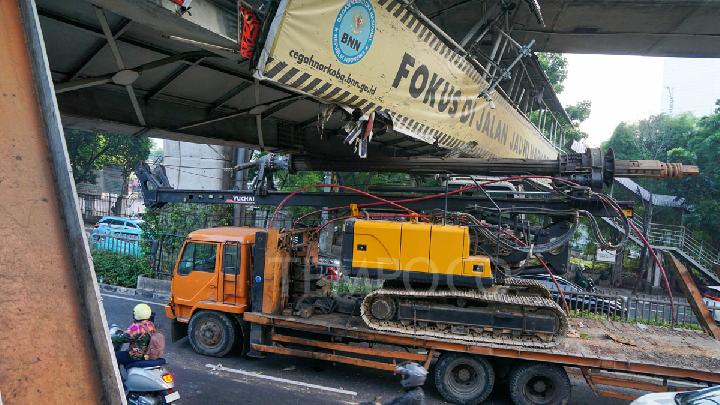
Jakarta’s Public Works Agency (Dinas Bina Marga) has estimated that the damage to the Tendean pedestrian bridge (JPO) will result in losses amounting to billions of rupiah. The catastrophic incident occurred when a truck transporting heavy equipment collided with the structure, causing significant structural damage that now requires extensive repairs and poses serious questions about urban infrastructure safety in’s capital city.
The Collision and Immediate Impact
Tendean pedestrian bridge, a vital crossing point for pedestrians in South Jakarta, suffered severe structural damage following the collision with an oversized vehicle. The truck, which was carrying heavy construction equipment, failed to clear the bridge’s height limitation, resulting in a forceful impact that compromised the integrity of the overpass structure. Witnesses reported hearing a loud crash as the vehicle’s cargo struck the underside of the bridge, causing visible deformation to the metal and concrete components.
The immediate aftermath of the accident led to the closure of both the pedestrian bridge and portions of the road beneath it. Local authorities cordoned off the area to prevent further accidents and to allow engineers to assess the full extent of the damage. The incident not only disrupted pedestrian traffic but also created significant vehicular congestion in the surrounding area, as Jalan Tendean serves as a major thoroughfare connecting several key districts in Jakarta.
Financial Assessment and Repair Costs
According to the preliminary assessment by Dinas Bina Marga, the financial losses from this single incident are staggering, reaching the billions of rupiah. This estimate encompasses not only the direct costs of repairing or potentially replacing the damaged bridge structure but also includes the economic impact of the closure engineering assessments, temporary measures, and the deployment of resources to manage the situation. The agency’s engineers are conducting thorough structural integrity tests to determine whether the bridge can be repaired or if complete reconstruction be necessary.
The substantial financial burden highlights recurring challenge faced by Jakarta’s infrastructure management.rian bridges are essential urban facilities that require significant investment to construct when damaged, they demand equally substantial resources to restore The costs involve specialized materials, skilled labor, engineering consultations, and the implementation of safety protocols during repair work. Additionally, if the damage is deemed too severe, the construction of entirely new bridge would multiply these expenses considerablyBroader Infrastructure Safety Concerns
This incident with the Tendean pedestrian bridge is not an isolated occurrence Jakarta. The city has experienced multiple cases of oversized vehicles colliding with bridges, overpasses, and other elevated structures. These recurring accidents point to systemic issues including inadequate enforcement of vehicle height regulations, insufficient warning systems for drivers tall vehicles, and possibly unclear signage indicating height restrictions on urban roads.
Urban planning experts have long advocated for more robust preventive measures, including better height restriction barriers before bridge approaches, improved driver education regarding vehicle dimensions route planning, and stricter enforcement mechanismsized loads from accessing roads low-clearance structures. The financial safety costs these preventable accidents underscore the urgent need for comprehensive policy reforms transport managementImplications for Jakarta’s Urban Infrastructure
The damage to the Tendean pedestrian bridge serves as a stark reminder of the vulnerabilities within Jakarta’s urban infrastructure network. As city continues to grow and traffic volumes increase, the protection of existing infrastructure becomes increasingly critical. The billions of rupiah in estimated losses from this single incident could have been allocated other pressing development needs, from improving public transportation to expandingrian-friendly infrastructure in underserved areas.
Moving forward, Jakarta’s authorities face the dual challenge of repairing the immediate damage while implementing long-term solutions to prevent similar incidents. This includes not only physical improvements such as height detection systems and reinforced warning mechanisms but also administrative reforms to ensure strict compliance with transportation regulations. The incident will likely prompt renewed discussions about infrastructure resilience, maintenance protocols, and the enforcement of safety standards across’s rapidly developing urban centers.
Source: Tempo