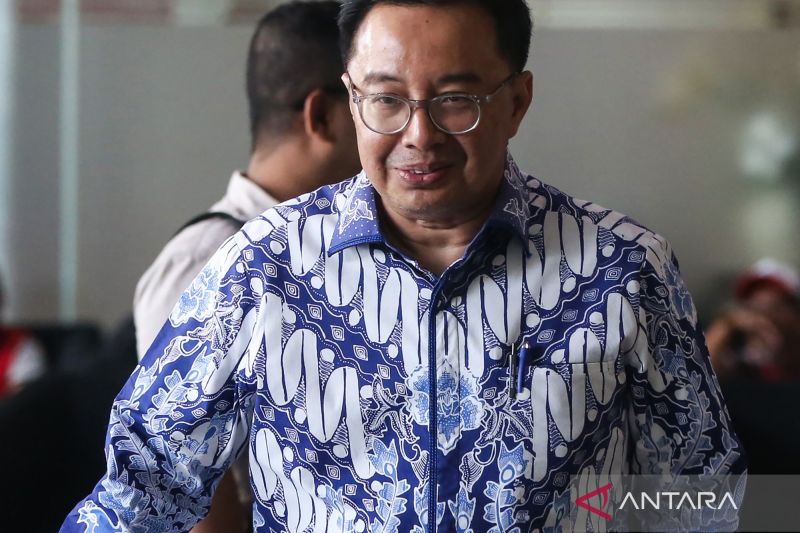
A member of Indonesia’s Supreme Audit Agency (BPK), Bobby Adhityo Rizaldi, has been summoned by the Corruption Eradication Commission (KPK) for questioning, marking another significant development in the country’s ongoing efforts to maintain within government institutions. The development coincides with the Judicial Commission’s intensified scrutiny of prospective judge candidates, reflecting a broader push for integrity across Indonesia’s legal and auditing frameworks.
BPK Auditor FacesPK Interrogation
Bobby Adhityo Rizaldi, who serves as a Member V of the Supreme Audit Agency of the Republic of Indonesia, responded to the KPK’s summons as part of an investigation whose specific details remain under wraps. The KPK, Indonesia’s primary anti-corruption institution, regularly conducts inquiries involving officials to ensure transparency and accountability in public service. The summoning of a BPK member is particularly significant given the agency’s crucial role in auditing state finances and ensuring fiscal responsibility across all levels of government.
The BPK is constitutionally mandated to examine management of state finances, making its members key figures in Indonesia’s governance structure. When investigators turn their attention to those responsible for auditing others it underscores the principle that no institution stands above scrutiny. The KPK’s involvement suggests the investigation may relate to potential irregularities discovered during audit processes or concerns about the integrity of financial oversight mechanisms.
This development comes at a time when Indonesia has been strengthening its anti-corruption framework, with the KPK expanding its investigative reach various government bodies The agency has historically played a pivotal role in prosecuting high-profile corruption cases, though it has also faced challenges reforms that have sparked debate about its independence and effectiveness in recent years.
Judicial Commission Intensifies Judge Candidate Vetting
In parallel developments, the Judicial Commission (Komisi Yudisial) has announced enhanced scrutiny procedures for prospective judge candidates, reflecting growing concerns about judicial integrity the quality of Indonesia’s legal system. The commission’s role in vetting and monitoring judges critical to maintaining public trust in the judiciary, particularly as country continues to strengthen rule of law institutions.
The Judicial Commission’s expanded into judge candidates involves comprehensive background checks, assessments, and evaluations of professional competence. This process aims to prevent individuals with questionable ethics or inadequate qualifications from ascending to the bench. The commission examines candidates’ financial records, professional histories, and personal conduct to ensure only those with impeccable integrity assume judicial positions.
Indonesia’s judiciary has faced persistent challenges related to corruption capacity constraints, making the Judicial Commission’s work increasingly important. Public confidence in the legal system depends heavily on the perception judges are impartial, competent, and free from corrupt influences. By intensifying its vetting procedures, the commission sends a clear message about the standards expected of who will interpret and apply the law.
Broader Implications for Governance Accountability
These concurrent developments highlight’s ongoing struggle to balance institutional independence with accountability mechanisms. The investigation of BPK member by the KPK demonstrates that oversight bodies themselves must remain subject to scrutiny, while the Judicial Commission’s enhanced vetting reflects recognition that preventing corruption more effective than prosecuting it after the fact.
As Indonesia continues its democratic consolidation and economic development, the of its legal and financial institutions remains paramount. The outcomes of bothPK investigation and the Judicial Commission’s enhanced vetting processes will likely influence public perceptions of government accountability and may set precedents for how Indonesia addresses integrity its most These represent important steps in country’s long-term commitment to good governance, transparency, and the rule of law.
Source: Antara